by Carolyn Bernhardt
March 10, 2026
Comprised of an expansive variety of nourishing and perilous plants, the solanaceous family represents one of nature’s most complex characters. Simultaneously nurturing life—through vital medicines, ornamentals, and food crops—and harboring deadly toxicity in species that can threaten both human health and agricultural stability.
From deadly nightshades to lovely geraniums, a smattering of solanaceous plants are susceptible to bacterial wilt, a disease commonly found in potato crops and caused by the pathogen Ralstonia solanacearum race 3 biovar 2. According to Devanshi Khokhani, PhD, R. solanacearum “can stay in water or soil for many, many years.” An assistant professor in the Department of Plant Pathology in the College of Food, Agricultural and Natural Resource Sciences, Khokhani is leading a research project to better understand which plants are most at risk of infection, and how they respond to it. This work, funded by the Minnesota Invasive Terrestrial Pests and Plants Center, will help clarify which conditions favor bacterial colonization and guide future detection efforts.
Getting to know a problematic pathogen
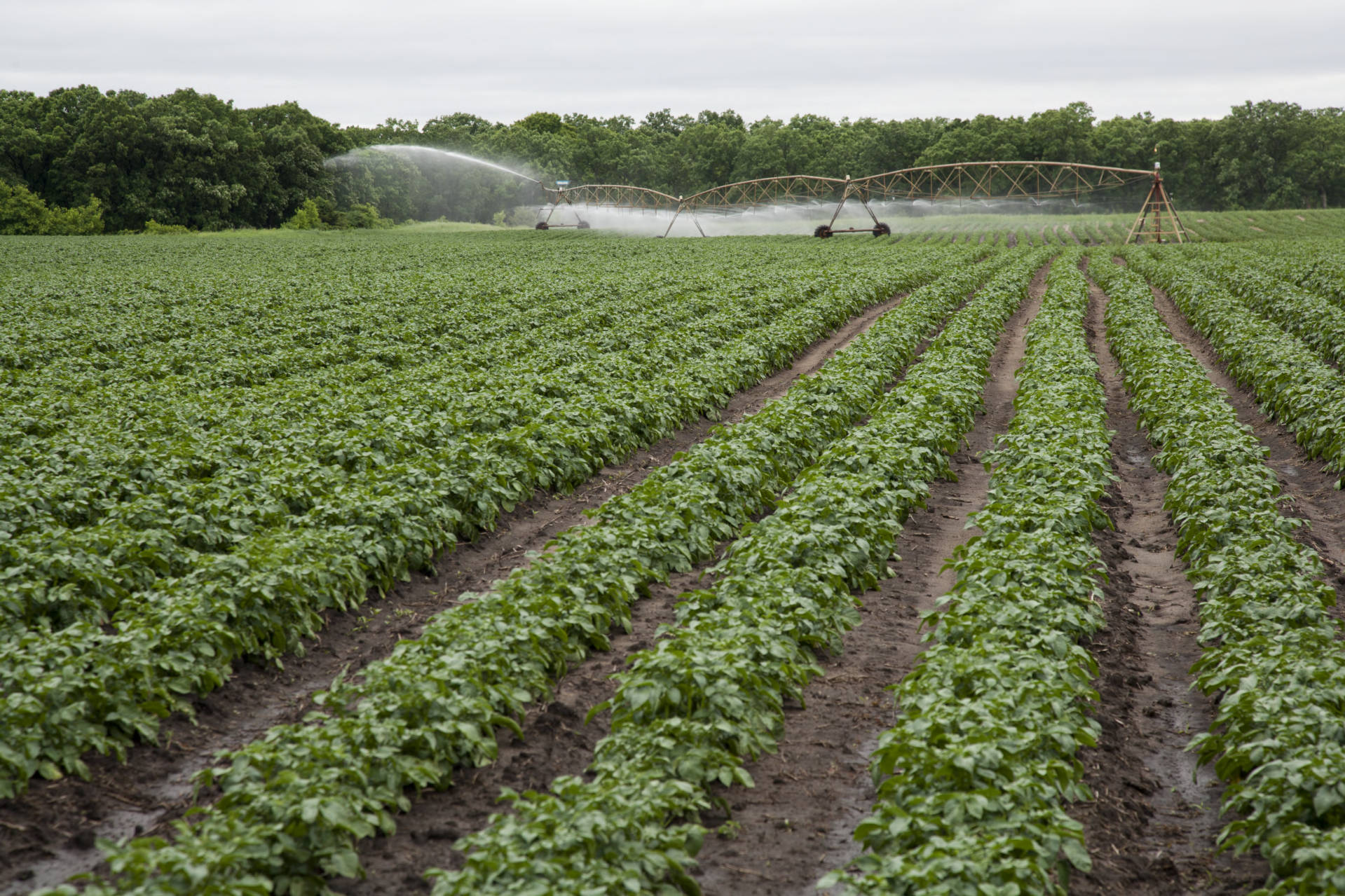
R. solanacearum is known among experts for latent infections. It can lurk in solanaceous weeds near potato crops, putting one of Minnesota’s top agricultural industries at risk—according to Khokhani, Minnesota is the seventh leading potato-producing state in the US.
The good news is: this pathogen is not currently found anywhere in the country. While it did infiltrate Michigan nurseries in 2020 through imported geraniums, the USDA APHIS program tracked them down and destroyed the flowers before the pathogen could reach the state’s crop populations. Still, the event set off alarm bells for Khokhani and other researchers.
The strain Khokhani is studying is cold-tolerant, so identifying which plants it can colonize easily and which it cannot is essential to keeping it out of Minnesota. “Other research points to additional cold-tolerant species, too,” Khokhani says.
She adds that other strains have already been closely researched, but available treatments are cumbersome, costly, and lengthy. “This pathogen can stay in water or soil for many, many years,” she says. “So even if you are done with one season, it can linger there in your soil and cause even more problems the next year.”
Covering smaller infected areas with plastic tarps can help, allowing the soil to build up heat that can kill the pathogen. Spot treating with chemicals is another option, but can have ecosystem ramifications. Either way, producers would have to completely abandon larger swaths of infected crops.
Immunity inquiry
The research team inoculated four nightshade species they found near potato crop fields in the lab to assess their responses over the following 4-5 weeks. While the plants responded slightly differently, they were all colonized by the deadly bacterium. “Some nightshades looked sick in 7 days, some looked sick at day 21,” says Khokhani. “Some have an interesting pattern—they would be sick one day and then gradually over the next couple of weeks they would be looking healthy again,” she says.
“Even if a particular nightshade has high levels of the pathogen in it, it could still be asymptomatic — no stunted growth, wilt symptoms, things like that,” explains Khokhani. “But even with that same level of colonization, others will look really sick.” She adds that 50 to 70% would recover.
Khokhani says the ways in which some nightshades bounced back from infection surprised her. “From the four varieties we tested, one variety would recover almost every time we conducted the disease progression assays,” she says. “We are doing more experiments to conclude there is a second one that can do that as well.” She says the team would have to test further to see if the resilience they witnessed in the lab is, in fact, immunity.
Although Khokhani’s drive to conduct more research remains steadfast, the process of gaining access to the pathogen for testing has presented some obstacles. “Getting the permits to work with this strain can take about a year,” she says. The USDA Animal and Plant Health Inspection Service expects Khokhani and her colleagues to keep detailed records of things like how many plants they inoculate and how many become symptomatic.
Forward momentum
With new MITPPC funding granted in January 2026, the team is now also investigating how temperature fluctuations in climates like Minnesota’s impact the pathogen’s ability to survive. “While it would be hard for the pathogen to survive Minnesota winters, we believe temperature fluctuations could affect its survival and establishment,” Khokhani says.
She also hopes to investigate the chemical and genetic compositions of nightshades in future research. Observations in the lab for this project led her to wonder whether there is something in the plant genome that scientists can tweak to help plants become more resistant to the pathogen. This information could help experts breed more tolerant varieties of potatoes, tomatoes, eggplants, and more. A collaborator suggested investigating the composition of the plant’s cell wall in the resilient nightshades, because it could be a difficult barrier for the pathogen to overcome in some cases.
Khokhani emphasizes that “planting resistant potato varieties will be key” for Minnesota producers, should the pathogen arrive in Minnesota. Thankfully, the dedicated efforts of her team have brought experts one step closer to a more resilient future for potato cultivation in the region, laying the groundwork for sustainable farming practices that will strengthen local agriculture and ensure food security for generations to come.
The Minnesota Invasive Terrestrial Plants and Pests Center research is supported by the Environment and Natural Resources Trust Fund, as recommended by the Legislative-Citizen Commission on Minnesota Resources.
Stay connected by signing up for the MITPPC newsletter.
More information
- Assessing the behavior of bacterial wilt disease in alternate hosts, research project
- Investigating Ralstonia host dynamics and persistence under environmental stress, research project
- First Report of Bacterial Wilt of Ginger Caused by Ralstonia pseudosolanacearum in the Continental United States, Plant Disease, 2025
- Ginger in danger: New bacterial pathogen found on the US mainland, UMN Department of Plant Pathology, 2025