By Carolyn Bernhardt
September 10, 2026
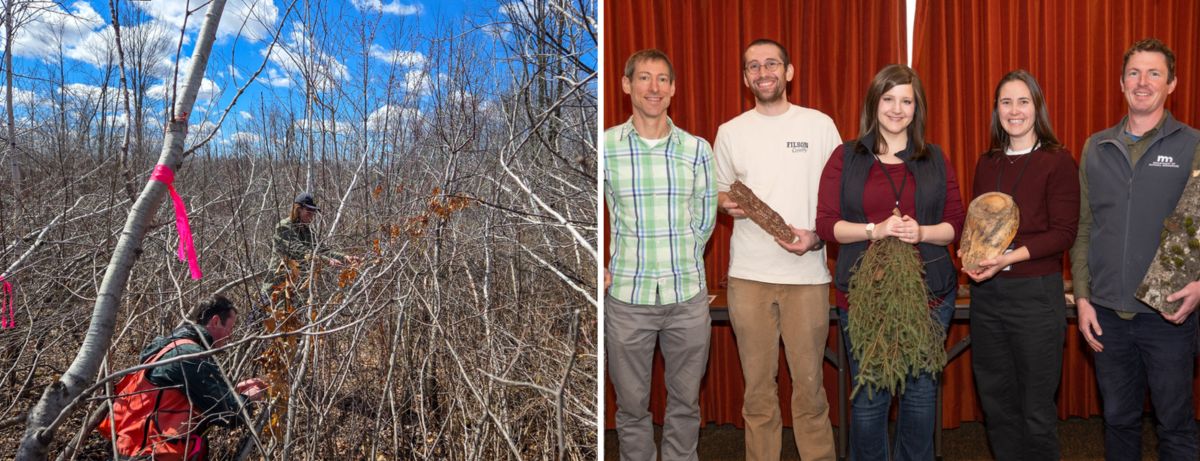
It's tempting to picture invasive species management as a search for a single, scalable solution: Researchers tinkering away in the lab or bushwhacking through the field in pursuit of a silver bullet that bolsters ecosystem health, protects resources, and saves everyone money in one fell swoop.
In reality, the process is much more complex.
Effective invasive species management depends on many interconnected efforts, including peer-reviewed research, land managers’ boots-on-the-ground experience, and sustained work that can take years to produce results. When it comes to identifying forest pathogens across Minnesota’s 17.6 million acres of forest, MITPPC researchers have found that collaboration with forest health specialists is essential. At the Minnesota DNR, Brian Schwingle leads a team of specialists who help connect research with what’s happening on the ground.
“Forest health specialists troubleshoot sick tree problems for professional foresters and track landscape-level outbreaks and infestations,” says Schwingle, Forest Health Program Coordinator at the Minnesota DNR. “We are a combination of tree doctor, lab clinician, and epidemiologist. We aren’t forest managers, but we work closely together, informing, helping, advising, and training them to ultimately help them achieve sustainable forest management.”
Schwingle views the role as a bridge between academic researchers and the practical needs of foresters and forestland owners. He says the Blanchette lab’s current research on biosurveillance is helping DNR forest health specialists and forest managers find and respond to invasive species much earlier than they otherwise would.
The DNR difference
Traditional forest health monitoring relies heavily on visual observation and reports of sick or dying trees. But pathogens can be present before obvious symptoms appear, and some invasive organisms can remain difficult to detect. That’s why the DNR’s forest health specialists don’t just respond to trees that are visibly dying, they also conduct biosurveillance, which includes monitoring Minnesota’s forests for signs of emerging insect and disease threats.
This more proactive approach enables early detection, allowing managers, forest health specialists, and researchers to get a jump on the problem before it becomes widespread, which is when management options become more limited.
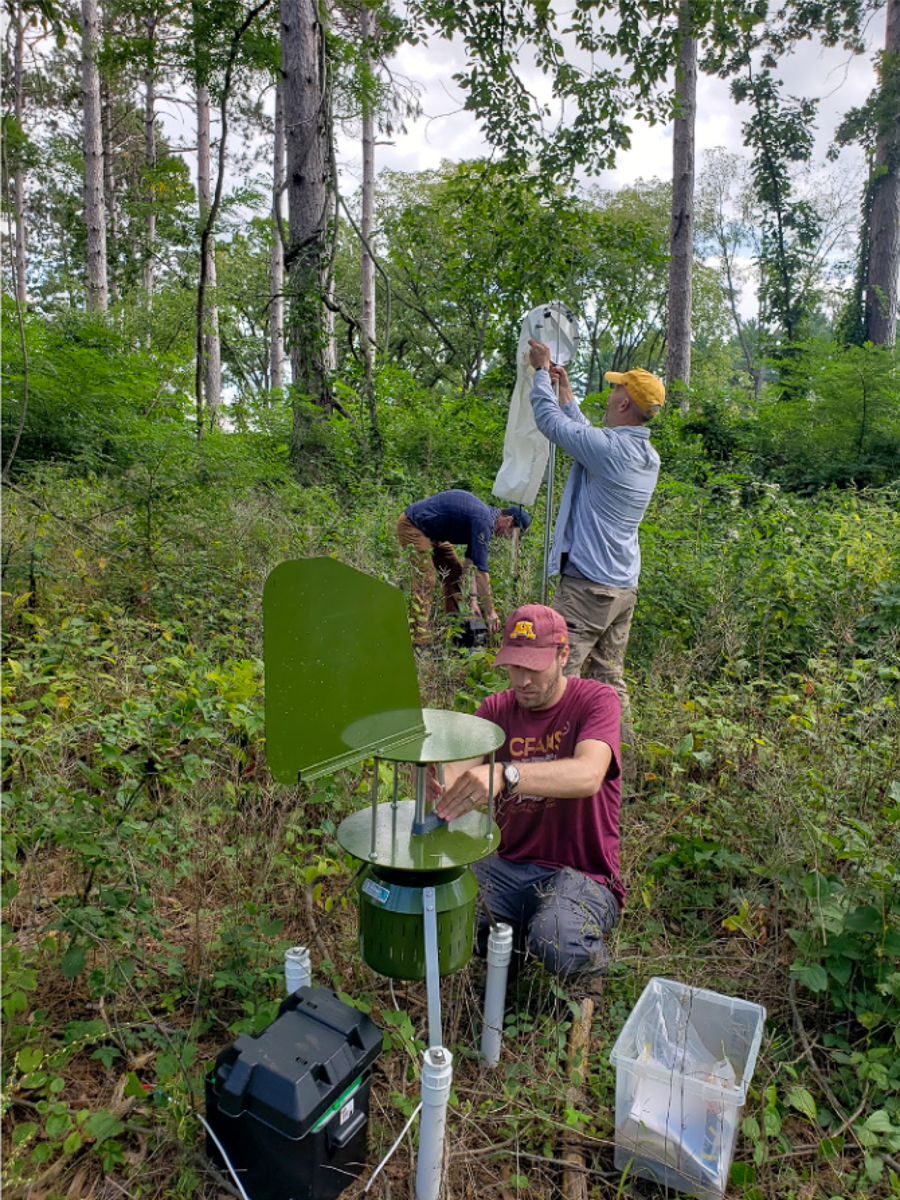
Nickolas Rajtar, PhD, a postdoctoral associate in the Blanchette lab, says Schwingle and his team have been essential partners. “We rely on them daily to help us find samples, stands, and locations that could contain forest pathogens. Without the Minnesota DNR, about 80% of our research would cease to exist,” he says.
The DNR most often serves as a resource for researchers by providing data, identifying research sites, connecting scientists with land managers, and collecting insect, disease and soil samples for research studies.
“I think our jobs as DNR forest health specialists, due to the data we collect and the professionals we work with, tends to steer the direction of some of the MITPPC research, and it might influence which proposals get funded,” Schwingle says. He served on the initial panel in 2015 that identified top-ranked invasive pathogens for MITPPC funding, which he recalls as, “an honor and fun experience.”
“One example of us steering research is the biosurveillance project,” he says. “If I remember correctly, the original proposal did not include setting out insect traps for oak wilt detection, but since oak wilt detection beyond its known range is one of the DNR forest health team’s top goals, I asked the research team to include it in their proposal, which they did, and which we greatly benefit from and appreciate!”
A two-way street
But the relationship goes both ways: Sometimes, researchers help direct forest health specialists’ biosurveillance efforts.
For example, Rajtar and Blanchette, along with Ben Held, PhD, a researcher in the Blanchette lab, detected oak wilt spores in a part of Minnesota beyond the known range of that disease, which allowed Schwingle’s team to spend more time searching that area for and researching the pathogen.

“They are using similar technology to try and help us refine where we’re looking for Heterobasidion Root Disease (HRD),” he says. “Rajtar analyzed soil samples that we collected in forests to determine if Phytophthora species were in them, allowing us to suggest likely contributors to forest decline to the landowners and managers.”
Finding a pathogen doesn't automatically mean the agency can eradicate or contain it. The process begins with researchers detecting something concerning. DNR Forest Health determines whether it warrants a more refined survey and, if warranted, the team tries to locate the organism precisely on the landscape. Then, they determine whether the DNR has the resources and capabilities to respond.
That response depends on personnel, funding, available management tools, markets, policy, and even political climate. So while better detection creates opportunities, it doesn't eliminate the difficult decisions that follow.
Still, the Center’s key relationships help turn scientific discoveries into early warnings—and, potentially, more options for protecting Minnesota's forests. The outcome isn't that Minnesota can anticipate and prevent every forest health threat. Rather, early information can create choices where there might otherwise be few. According to Schwingle, this gives him hope where previously there was none.
“I’m not aware of any other state that funds invasive species research through an institution like MITPPC via a fund like the Environment and Natural Resources Trust Fund,” says Schwingle. “I feel very fortunate to live and work in a state that funds protection, conservation, preservation, and enhancement of the state's natural resources. Likewise, I feel very fortunate to live in a state that prioritizes funding research on terrestrial invasive species detection and control.”
The Minnesota Invasive Terrestrial Plants and Pests Center research is supported by the Environment and Natural Resources Trust Fund, as recommended by the Legislative-Citizen Commission on Minnesota Resources.
Stay connected by signing up for the MITPPC newsletter.
More information
- Oak wilt information, Minnesota Department of Natural Resources
- Oak wilt information, UMN Extension
- Identifying Phytophthora and emerging plant pathogens entering MN through new pathways, research project
- Biosurveillance of invasive pathogens of woody plants in Minnesota, research project
- Biosurveillance project flags first sudden oak death detection in Minnesota